Leading with Purpose: Building Culture, Trust, and Community in Ohio’s Schools: Lessons from Dr. Joe Clark
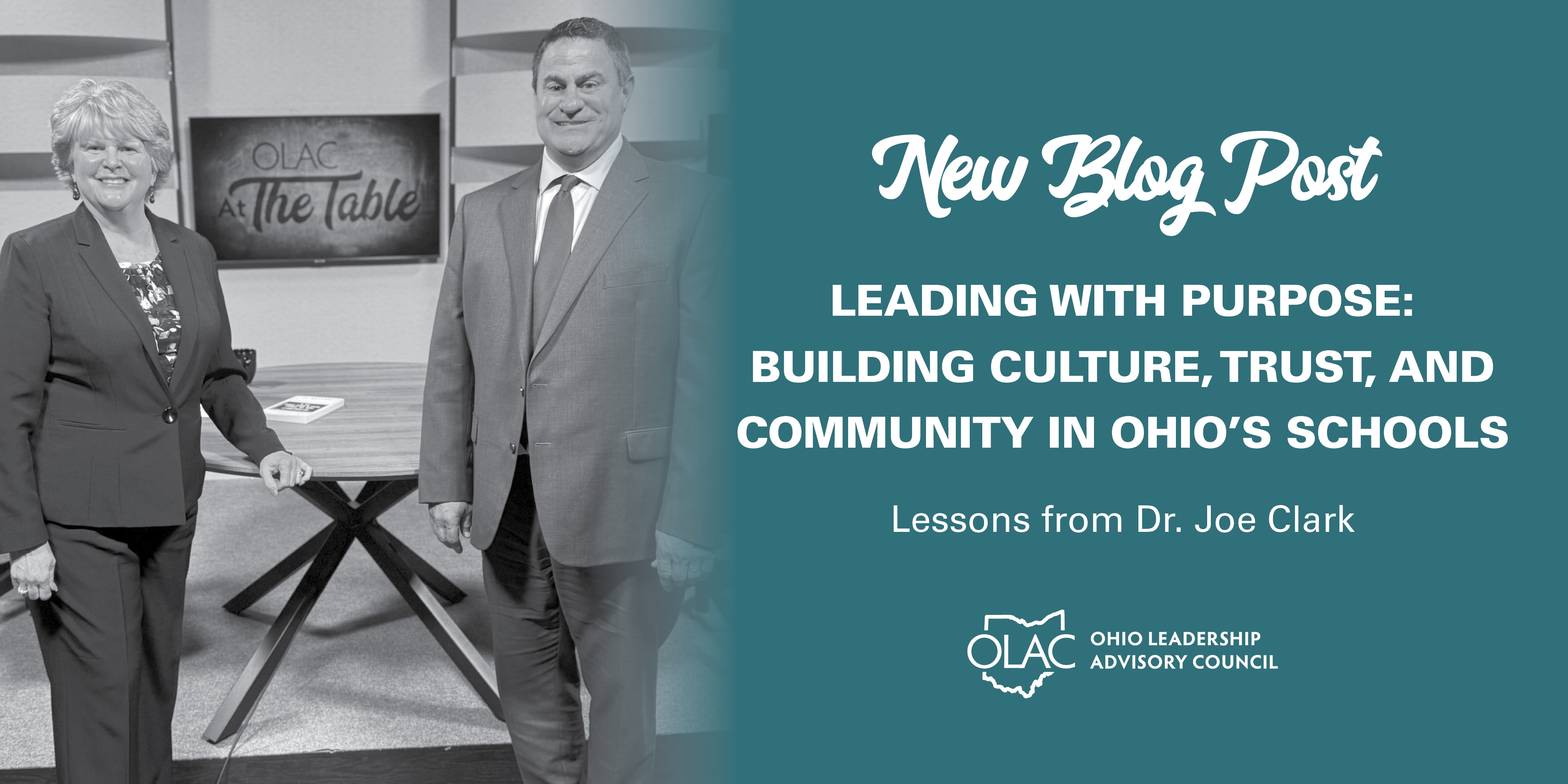
Ohio’s schools are filled with leaders who strive every day to foster strong teaching, vibrant cultures, and meaningful community partnerships. Few have articulated the heart of that work as clearly as Dr. Joe Clark, a respected Ohio educator whose 33-year career spans classroom teaching, building leadership, central office administration, the superintendency, and higher education. His perspective—shaped by decades of experience, deep humility, and a service-centered mindset—offers powerful guidance for leaders across the state.
Clark’s leadership philosophy rests on a simple premise—leadership is about widening your circle of service. As he moved from teacher to principal to superintendent, his focus remained constant—supporting people. The further he advanced, the more individuals he could help succeed. For Clark, leadership has never been about position or authority; it has always been about improving the lives of students, educators, families, and communities.
Shared Leadership: Conducting the Orchestra
One of Clark’s most enduring beliefs is the importance of shared leadership. Effective leaders, he explains, are not meant to “play every instrument in the orchestra,” but rather to conduct it. That means recognizing the strengths of others and creating the conditions for them to thrive. Clark’s approach to shared leadership emphasizes:
- Trusting educators as professionals
- Creating time and space for collaboration
- Inviting authentic contributions
- Accepting team decisions—even when they differ from your own
- Allowing others to learn from mistakes, just as leaders do
Embedded in these practices is Clark’s commitment to vulnerability. Leaders who admit when they are wrong, who reflect openly, and who model continuous improvement build credibility that no mandate or memo could ever achieve. Vulnerability, in his view, is a leadership strength that accelerates trust.
Leadership’s Four Essential Ingredients
Clark often describes leadership as a “recipe”—and no matter the size of the school or district, the core ingredients remain the same: visibility, empathy, gratitude, and vulnerability.
- Visibility
Clark believes leaders must be physically present where learning and life happen. Whether in classrooms, cafeterias, hallways, concerts, athletic events, robotics tournaments, or lesser-attended student activities, visibility communicates respect and understanding. It shows that leaders care about what students and staff experience every day.
- Empathy
Throughout his career, Clark has emphasized that every staff member—teachers, bus drivers, custodians, counselors, paraprofessionals—carries personal challenges. Leaders who lead with empathy build supportive environments where people feel valued as colleagues and as human beings.
- Gratitude
Clark has long modeled the power of a simple “thank you.” Expressing appreciation consistently and sincerely strengthens culture and reinforces the shared mission that binds a school community together.
- Vulnerability
In Clark’s view, leaders who acknowledge mistakes, apologize when needed, and commit to growing alongside their staff cultivate trust far more effectively than leaders who project perfection. Vulnerability signals authenticity—and authenticity strengthens culture.
Community Partnerships: Schools Can’t Do It Alone
Clark’s district-level leadership also demonstrates how community engagement can transform relationships and create broad support for schools. In each district he served, he mapped out every local organization with influence—from PTAs and booster groups to chambers of commerce, elected officials, civic clubs, police and fire departments, ministers, and business associations. He met with each group individually, asking three questions that opened dialogue and built trust:
- What do you value about our schools?
- Where can we improve?
- What do you expect from district leadership?
These conversations helped align expectations, reduce barriers, and foster shared ownership. Clark’s approach reinforced a truth he often cites—schools cannot and should not do this work alone.
Leading with Joy and Authenticity
While Clark is known for his strategic leadership, he is equally known for leading with joy. He has always believed that creativity, humor, and authenticity make leaders more approachable and strengthen school culture. Whether spotlighting student work, reading aloud to children, or connecting with families through fun community traditions, Clark demonstrates that joy is not an add-on—it is a leadership strategy.
Advice for Emerging Leaders
For those considering leadership roles, Clark offers grounded guidance—enter the work for the right reasons. Leadership brings stress, tough decisions, and moments of conflict, but when rooted in service, the work becomes deeply meaningful. His advice includes:
- Prioritize relationships
- Stay visible and accessible
- Embrace vulnerability and growth
- Lead with empathy and gratitude
- Keep students at the center
- Be the best person for the job, not just the best manager
Above all, Clark encourages leaders to approach each year not as a repeat of the last, but as an opportunity to grow. Leadership, he reminds us, is about evolving—and helping others evolve along the way.
Learn more in Episode 22: Transformative Leadership in Education: A Conversation with Dr. Joe Clark on At the Table.