One ‘Family’ United: Northridge Local’s Systems Approach Makes Literacy Achievement the Priority for Every Learner
November 2026
"Our District vision is to be One Family United—to engage, innovate, and inspire. That vision is more than a statement on a wall; it is a commitment to be the heart of our community and a source of hope, opportunity, and belonging for every child and family we serve,” said Dave Jackson, in his 17th year as Superintendent of Northridge Local Schools in Dayton, Ohio, and his 26th year with the District.
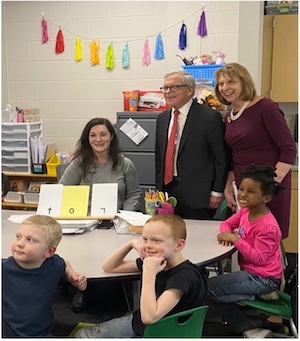
“We call ourselves the Northridge Family because we believe the success of our children is a shared responsibility. Exceptional instruction matters tremendously, but so do the compassionate supports that help remove barriers to learning and allow children to flourish. Our responsibility extends beyond classroom walls. When I speak of the Northridge Family, I mean our students, staff, families, and neighbors throughout all seven square miles of our community. Every person deserves to be believed in, cared for, and loved—and every child deserves the opportunity to dream big and achieve more than they ever imagined,” added Jackson.
Northridge Local Schools serves about 1,600 students in pre-kindergarten through 12th grade, 100% of whom are categorized by the state as economically disadvantaged. A little more than half of the student population is Black, Hispanic, or multiracial and about 44% is White. “We serve a very high needs, low socio-economic status community. More than 50% of our children live in single-parent homes and many live with other relatives, are foster-placed or homeless, and have experienced trauma. Northridge serves the largest Section 8 housing project in the city of Dayton,” explained Jackson.
The district serves all students in one school building, organized into elementary, middle, and high school neighborhoods. The move to one building was the result of a community supported bond levy in partnership with the Ohio Facilities Construction Commission (OFCC), which occurred just after the 2019 Memorial Day tornadoes that devastated the area and demolished one of the district’s schools. Jackson recalls the 15 tornadoes that “ripped through our region and ravaged our neighborhoods. And the first people on the ground in neighborhoods going door to door and pulling people from the rubble were school employees. It was us. When people needed help, they came to us. They didn’t go to the township, the city, the county, FEMA; they came to us and that’s because we believe in those supports, in being the lighthouse on the hill.”
From Launching Initiatives to Building a System
In 2018, Northridge began the process of creating a multi-tiered system of supports (MTSS) structure to strengthen instruction, particularly in literacy, and improve student learning in all classrooms across the district. With support from a Striving Readers Grant1, the district began to use structured literacy practices grounded in the science of reading and, at the same time, attend to all aspects of a child’s life. Jackson recalled: “At the heart of everything we do is the MTSS structure; it drives the work. Eight or so years ago, we grabbed all kinds of wonderful things and threw them at all kinds of teams and hoped they stuck without preparing people for change, without doing it the right way or the sustainable way. We’re now rooted in implementation science and have developed a coaching culture. Everyone is coached, including me, so we’re providing feedback to every staff member on a regular, intentional basis.”
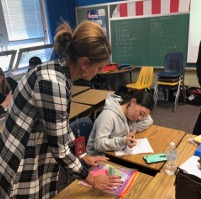
“It starts with us building our capacity as coaches, and using the Ohio coaching model, and considering how we’re implementing it within our coaching plans, utilizing those tools to go through the feedback cycle with our teachers, and making it as effective as possible,” added Amanda Wilson, elementary Literacy Coach at the K-2 level.
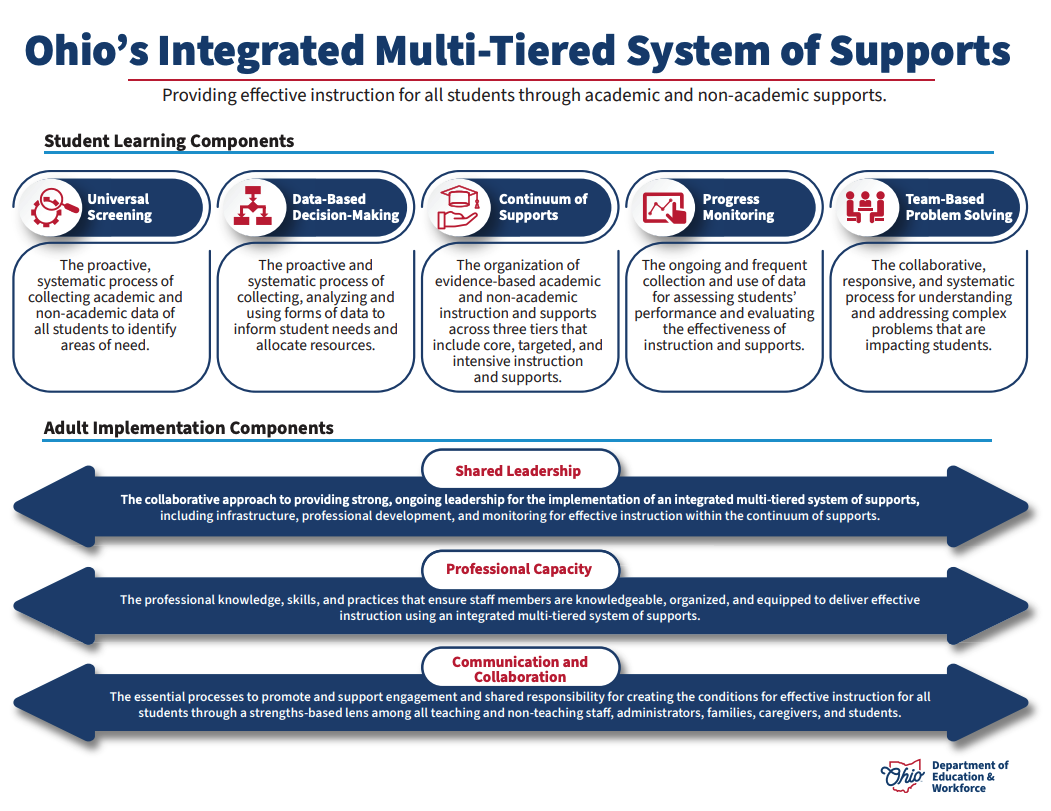
Northridge’s MTSS model preceded the state’s release of an Integrated Multi-Tiered System of Supports (MTSS) framework in August 2025.2 Described as a student success framework, Ohio’s model supports districts in addressing both academic and non-academic areas of need for every student. Rather than categorizing students as Tier 1, 2, or 3 – or red, yellow, green – the Integrated MTSS framework details the student learning and adult implementation components needed to provide strong core instruction for every student and the additional Tier 2 and 3 supports for students who need them, whether they be students with learning challenges, students with disabilities, or students identified as gifted/talented.
The “ALL” in Ohio’s model also extends to adults. “Ohio's Integrated MTSS is the collective responsibility of all levels of the educational system. Through collaborative leadership and teaming, focused professional learning, and consistent communication and collaboration, each level plays a role in creating the conditions for effective academic and non-academic instruction and supports for all Ohio students” (DEW, 2025).
Northridge’s MTSS model exemplifies an all student, all educator approach. “We’re going to provide the intervention that addresses a student’s needs and that will support them to achieve. It doesn’t matter if they’re a student with a disability, an EL student, or any other student, they’re included. We want to see each of them achieve,” said Jackson. “It’s a group effort so they are all of our kids,” added Jenna Fuerst, MTSS elementary Co-teacher.
Team structures foster shared leadership. Northridge Local’s use of inter-related team structures involves all educators at all levels of the district. Teams include a District Implementation Team (DIT), Building Leadership Teams (BLTs), Teacher-based Teams (TBTs), and Multidisciplinary Teams (MDTs). “The DIT focuses on supporting the PK-12 system, removing barriers, and overseeing implementation of literacy improvement and other areas,” explained Hiser.
The DIT is similar to a District Leadership Team (DLT) and includes, among others, the superintendent, the special education director, the curriculum director, and two facilitators – Derrick Thomas and Nick Long. Both Thomas and Long are Student Success Administrators (SSAs) at the K-5 and middle school levels, respectively. Thomas also serves as the elementary MDT facilitator. “The DIT has representation from all key components of our district so that everybody has a voice without making the team so large that it becomes difficult to wield,” said Jackson.
BLTs focus on supporting implementation at the building level, while TBTs focus on grade levels. According to Jackson, TBTs focus heavily on Tier 1 instruction, using strategic unit planning to think ahead and be proactive, rather than reactive. MDTs focus on advanced tiers and the use of screeners, intervention-matching, and progress monitoring. “At the elementary level, the MDT works with the advanced tiers for literacy. We use MAP and Acadience screener data for students who are on RIMPS3, and we do intervention matching to determine what type of intervention and what intervention program we would use to address the student’s specific needs as identified by those assessments, explained Fuerst.
For Tina Kretzer and Amanda Wilson – both Literacy Coaches at the grades 3-5 and K-2 levels, respectively –supporting TBTs is a critical part of their day. “Every time a problem would come up, we’d implement our unit internalization protocol, which we call strategic planning. We've taken what we learned from our work with our state literacy grant last year and we have adapted that to our needs using our Amplify curriculum. Our Amplify coaches have really helped us refine that process, and we're rolling that out this year, so we're a month into that process, and it's really been pretty phenomenal the way that we're able to dig into a curriculum,” explained Kretzer.
The district’s 2025 Comprehensive State Literacy Grant is helping sustain and strengthen its ongoing efforts to improve literacy instruction and student achievement. TBTs meet throughout the day at different grade levels and Kretzer and Wilson visit classrooms.
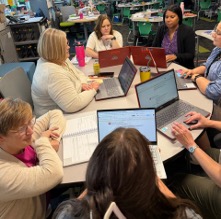
The structures put in place allow us to “know when everybody's teaching reading, so we're in the classrooms, we're giving one-on-one feedback to those teachers, and then all of that data is also compiled so that grade levels have adult fidelity data to take a look at,” added Kretzer.
“The process of providing intervention to students is laid out, letting us know what our screeners are, what our diagnostics are, and how and when to provide intensifications for students. It’s a really spelled out, thorough system,” said Derrick Thomas. Teams, from the district to buildings to teacher and multidisciplinary teams are aligned to support constant communication between and among educators across the school system.
“Because of the team structure and the shared decision-making, Tier 1 informs the advanced tiers and the advanced tiers inform Tier 1 and that kind of back and forth strengthens the work at all levels. We all believe the best intervention is a strong Tier 1. But we weren't willing to focus only on Tier 1 because we've been guilty of that in the past, quite frankly,” explained Jackson. “Shared leadership is at the heart of our MTSS model,” he added.
Dismantling the Predictive Power of Demographics
Reducing the predictive power of demographics, according to Jackson, requires a combination of exceptional instruction and compassionate support:
It started with a two-year process of reviewing, selecting, and adopting high-quality instructional materials. It wasn't just reviewing and selecting, it was readiness activities, and LETRS training, and all the things we needed to look at. It wasn’t just a mind shift, it was a heart shift and going through a kind of mourning in realizing we've not been doing this the best way we should be doing it. For some of our staff, they’d been pouring their heart and soul into teaching reading for 25 years or more, only to realize we haven't been using the best practices, and working through that and moving people to joint work, teamwork. It’s not individual operators anymore; it’s a systematic team approach.
Tony Hiser who serves as PK-12 Building Administrator and as a coach to the Student Success Administrators (SSAs) who are grade band administrators, agrees. “We knew we had a fire, and our fire is kids who can’t read. The admin team really kind of set the stage to make sure that there was an appropriate amount of literacy instruction that was scheduled and that was very protected, and that no student should ever be pulled during that time. It set the stage for how we do our work and it also made sure that we could do targeted coaching.”
A barrier removal process was instituted, allowing TBTs to raise barriers to BLTs, and BLTs to raise barriers to the DIT. About six years ago, “we discovered that we had a barrier in that some grades didn’t have enough time to teach reading. So we used the process and figured out how to ensure that every grade had a minimum of 90 minutes of core reading instruction and increased that to 120 minutes for K-2 when we adopted Amplify,” recalled Todd Petty, the PK-5 SSA who works primarily with children in kindergarten through second grade.
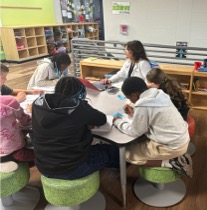
All teachers are reading teachers. In addition to the set period for English and reading classes at the middle and high school levels, there is a Secondary Content Area Literacy Model (SCALM) in place, said Nick Long, SSA for the middle school level. “SCALM is used in social studies and science classes and it supports a bigger shift in teacher mindset so instead of thinking ‘that's the English teacher's job, I'm also part of supporting the reading aspect of this child in my science class or my social studies class,’” said Long.
“I think another important piece that we added was the adult fidelity measures of making sure that staff are implementing practices with fidelity. Starting from the very beginning, we were looking at basic components of instructional delivery. Are they using the components? Are they staying within the time constraints? And then moving forward, we're looking at more explicit elements of instruction as we increase our level of implementation,” explained Wilson.
“We know literacy is the key for our students; if you’re not a competent reader, your life will be difficult and you will struggle. And, in all subject areas, reading is the key component to success. So, our focus has been primarily on improving literacy and developing strong readers across the district. We’ve seen improvements and gains every year but there is still a lot of work to be done and we’re committed to that work,” stated Jackson.
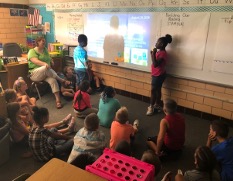
“We speak a lot here about not just reducing the predictive power of demographics, but systematically dismantling the predictive power of those demographics. Putting systems in place is a key. We're big believers in collective efficacy and our ability to be the difference. We talk about shining our light. We talk about taking full responsibility for the learning of every child. And that's not always a comfortable statement. It's easy to take responsibility for their success. It's hard to take responsibility for their failures, but that's what we believe and what we aspire to do,” said Jackson.
Northridge’s MDT team process has focused on all students, including those with disabilities and English Learners and their work is paying off in closing achievement gaps. “Our gap closing this year is three stars for the first time,” said Jackson.
“We're constantly growing, constantly learning, constantly shifting things and doing new things. We've looked at students who are on IEPs and students who are ELL and how we can inform the IEP, and how the IEP can inform the intervention. Our focus is on working together in a more cohesive way so that we make sure we're doing all the things that we can from all the angles to support each student in the best way possible no matter their needs, no matter their deficits,” said Emily Stewart, elementary School Counselor.
We Are Family
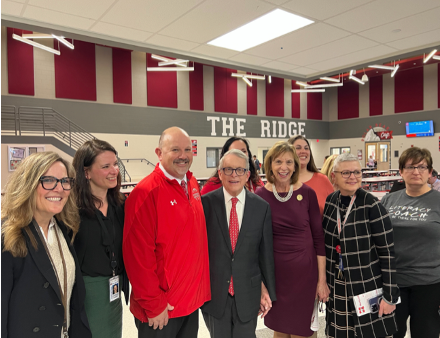
Northridge Local is supported by SST Region 10, which is credited by the district with playing a major role in its improvement journey. “The SST has definitely brought us to a coaching culture. They coach us and they allow us and help us train; they model for us what good coaching and feedback look like. They serve on teams where they ask questions and raise concerns, and they truly have become part of the Northridge family. They’ve made us better without telling us what to do or how to do it, so that we own the work,” said Jackson.
Sue Seelig and Heather Kulin, SST 10 consultants, support district improvement efforts. “Northridge has invested in building something sustainable, and being willing to engage in and develop coaching relationships means everything. It has been an incredible experience working with people who want to improve and want to engage in coaching,” said Seelig. Kulin added: “they’re not only willing to be coached, but to coach others. So many times we see PD alone being implemented within a district but we know the impact is going to come from that coaching piece.”
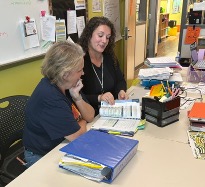
“I think the SST might be the single greatest factor in what has taken us from where we’ve been to where we’re heading. I’m able to admit what I don’t know and be vulnerable with Sue. Her coaching, her feedback, her holding us accountable, her having high expectations for us, which at times is not pleasant, might be the single greatest factor in what has taken us from where we've been to where we're heading. And they believe in us, and there's something about when someone believes in you that just continues to fuel you,” offered Petty.
“We want total employee engagement in the work,” said Hiser. Petty agrees: “One of my passions is for people to be alive at work and I’m seeing that as we’re empowering educators, we’re trusting them. For example, a first grade team is doing some amazing things and it’s all because they’re following their passion for improvement; they’re fully engaged in the work; they own it!”
Total employee engagement is a phrase used in the district’s Lean Six Sigma training, which focuses on process improvement. It also reflects an idea from Amy Edmondson’s The Fearless Organization: the challenges we face are too complex for any one person to solve alone. Progress depends on everyone contributing their knowledge, experience, and expertise.
Where do we want to be in five years? “We want to leave a legacy of a Northridge Family grounded in sustainable systems that ensure exceptional instruction and compassionate support for every child, year after year. A family that never stops learning, growing, improving, and thriving. We want our children to dream big dreams—and to develop the knowledge, character, confidence, and work ethic to make those dreams a reality. We want Northridge to be a place where students, staff, families, and our entire community want to be, because they know they belong and they matter. My hope is that we remain a lighthouse on the hill: a steady source of hope, opportunity, and encouragement, helping every member of our Northridge Family become the very best version of themselves. That is the legacy worth building, and one we must continue building together as the Northridge Family,” said Jackson.
1 Ohio’s Striving Readers Comprehensive Literacy Grant was a $35 million federal award from the US Department of Education to Ohio in 2017 to improve language and literacy development from birth through grade 12 from 2017 to 2020. Since then, the state has supported districts’ literacy improvement efforts through several federal Comprehensive Literacy State Development (CLSD) grants and substantial state funding under Governor DeWine’s ReadOhio initiative. For additional information, go to the Ohio Department of Education and Workforce (DEW) website here.
2 For more information, see Ohio's Integrated Multi-Tiered System of Supports | Ohio Department of Education and Workforce.
3 RIMPs are Reading Improvement Monitoring Plans. For more information, click here.
References
Edmonson, A. C. (2018). The fearless organization: Creating psychological safety in the workplace for learning, innovation, and growth. John Wiley & Sons.
Moats, L. C., & Tolman, C. A. (2019). LETRS: Language essentials for teachers of reading and spelling (3rd ed., Vols. 1–2). Voyager Sopris Learning.
Ohio Department of Education and Workforce (October 30, 2025). Understanding student learning components within Ohio's Integrated Multi-Tiered System of Supports - PDF Presentation | Recording
For More Information
For more information about the Northridge Local Schools improvement journey, contact Dave Jackson, Superintendent, at [email protected] or 937.278.5885.
For more information about resources to support districts, contact Elizabeth Lolli, PhD, Director, at [email protected].